Chocolate Peanut Butter Smoothie That Isn’t a Sugar Bomb
Chocolate and peanut butter belong together, obviously. But most “healthy” smoothies taste like dessert and hit you with a sugar crash an hour later. Hard pass. Let’s build a chocolate peanut butter smoothie that tastes like a milkshake, fuels your day, and doesn’t sneak in a candy store’s worth of sweeteners. Ready to blend smarter?
Why Most Chocolate PB Smoothies Go Off the Rails
Most recipes start with the best intentions and end with a sugar avalanche. Think banana, dates, honey, chocolate syrup, and sweetened protein powder—plus “just a splash” of sweetened almond milk. That’s a lot of sugar wearing a yoga pants disguise.
We can fix this with a few swaps. The goal: keep the creamy texture, big chocolate flavor, and peanut butter richness without sending your blood sugar on a roller coaster.
The Blueprint: Low-Sugar, High-Satiety Smoothie
Here’s the base formula I use. It’s flexible, forgiving, and seriously tasty.
- Liquid (1 to 1 1/4 cups): Unsweetened almond milk, cashew milk, or dairy milk if you tolerate it. Coconut milk works too, but go light—it’s rich.
- Protein (20–30g): Choose an unsweetened protein powder you like: whey isolate, casein, or a clean plant blend. Check labels: 0–2g sugar per scoop is ideal.
- Fiber and texture (1/2–1 cup): Frozen riced cauliflower or zucchini for creaminess with almost no sugar. Yes, really. You won’t taste it.
- Chocolate (1–1 1/2 tbsp): Unsweetened cocoa powder or cacao powder. This brings the flavor without extra sugar.
- Fat for satisfaction (1–2 tbsp): Natural peanut butter (no added sugar) or powdered peanut butter if you want lower calories.
- Optional fruit (1/2 small banana or 1/2 cup berries): Just enough for sweetness, not a fructose fireworks show.
- Sweetener (to taste): A dash of stevia, monk fruit, or allulose if you need it. Start tiny.
- Ice: A handful, especially if you didn’t use frozen veg or fruit.
Blend until absurdly smooth. You want that thick, creamy, spoonable situation, not a watery shake that tastes like regret.
My Go-To Combo (Balanced and Dessert-Like)
- 1 cup unsweetened almond milk
- 1 scoop chocolate or unflavored protein powder (unsweetened)
- 3/4 cup frozen riced cauliflower
- 1 tbsp cocoa powder
- 1 tbsp natural peanut butter
- 1/2 frozen banana (or 1/3 if you’re strict)
- Pinch of salt and 1/2 tsp vanilla
- Ice as needed
Taste, then add a few drops of stevia if you want more sweetness. It hits like a milkshake with training wheels.
Flavor Boosters That Don’t Spike Sugar
You can level this up with small tweaks that bring big payoff.
- Espresso shot or instant coffee: Turns it into a mocha. Also, you become a morning person. Maybe.
- Cinnamon or cardamom: Extra warmth and perceived sweetness without actual sugar.
- Pinch of salt: Makes chocolate taste richer. Don’t skip.
- Vanilla extract: Adds roundness and dessert vibes.
- Xanthan gum or psyllium (1/8 tsp): Thickens the smoothie like a pro milkshake without sugar.
- Greek yogurt (unsweetened): Creamy tang and extra protein. Go for 1/4 to 1/2 cup.
When You Crave a Reese’s Vibe
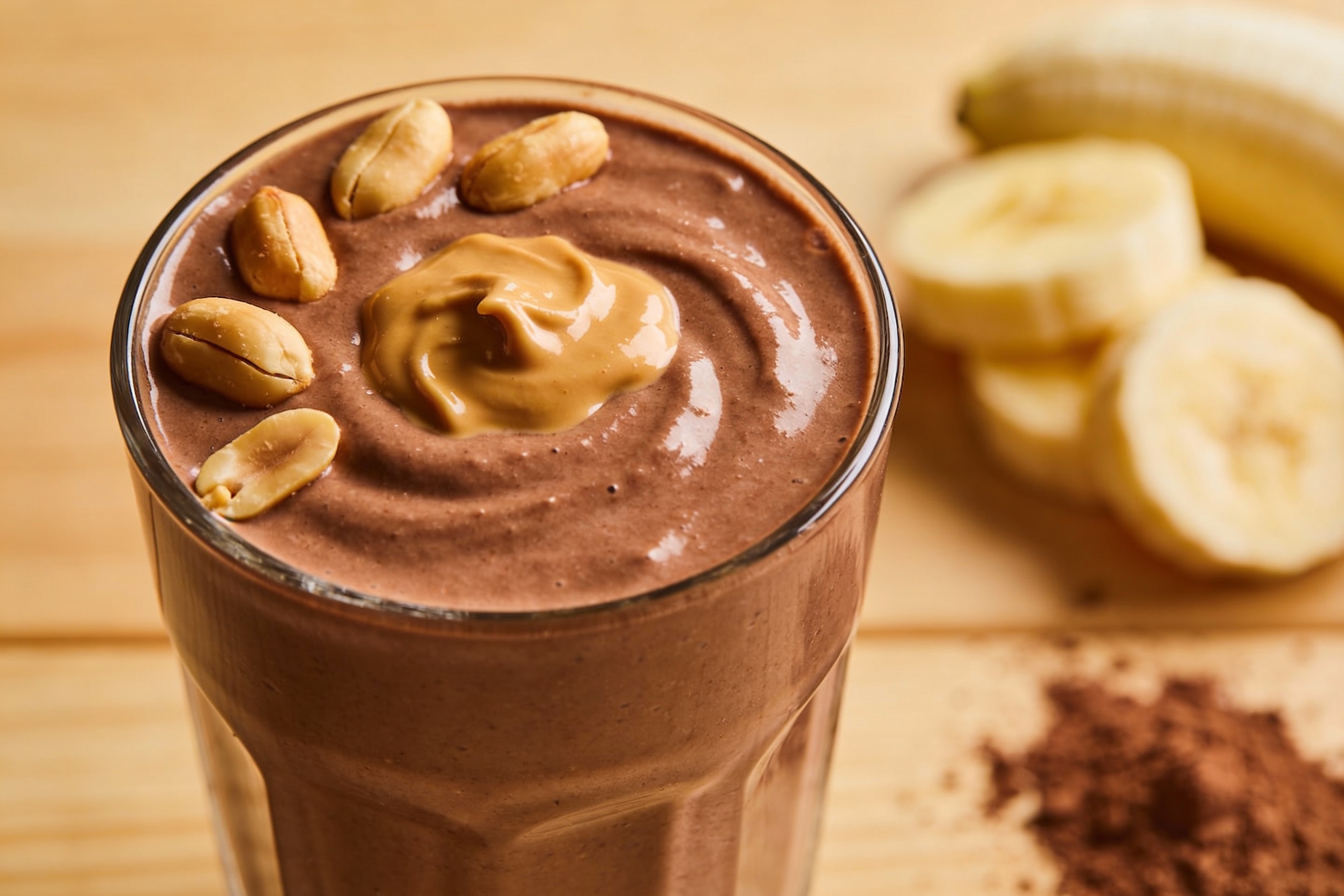
Add a tiny drizzle of melted dark chocolate (85% cocoa) on top and a sprinkle of crushed peanuts. It feels fancy, but it’s still controlled. FYI, the garnish changes the experience more than the macros.
How to Keep Sugar Low Without Killing Flavor
You don’t need to axe sweetness entirely—you just need balance. Here’s the cheat sheet.
- Use fruit strategically: Half a banana gives creamy sweetness for ~7g sugar. Or swap berries for even less.
- Rely on cocoa + salt + vanilla: This trio tricks your brain into “richer” with less sugar.
- Pick the right protein powder: Sweetened powders can add 5–10g sugar per scoop. Choose unsweetened and control it yourself.
- Mind your milk: Sweetened almond or oat milk can add 10–15g sugar per cup. Choose unsweetened. Always.
- Lean on non-nutritive sweeteners if you want: Monk fruit and stevia do the job minus the crash.
But What About Oat Milk?
It’s delicious, but it can pack more carbs—even when unsweetened. If you love it, use 1/2 cup oat + 1/2 cup almond to keep sugars lower while keeping that creamy mouthfeel. IMO, it’s a great compromise.
Macros That Actually Make Sense
We want a smoothie that keeps you full, not one that makes you snack an hour later. Aim for:
- Protein: 20–35g
- Fat: 10–20g (depending on your peanut butter amount)
- Net carbs: 10–25g, depending on banana/berries and milk choice
- Fiber: 5–10g (from veg, psyllium, chia, or ground flax)
Translation: you’ll stay full, keep energy steady, and still get that chocolate-peanut butter bliss.
Easy Add-Ins for Extra Function
– Chia or ground flax (1 tbsp): Fiber + omega-3s, mild taste.
– Creatine (3–5g): If you train. No taste, no drama.
– Collagen (1–2 scoops): For joint/skin support, but add a real protein too—collagen lacks key aminos.
– Spinach (handful): You won’t taste it, but you’ll feel smug. Win-win.
Three Variations You’ll Actually Make
1) The Classic Low-Sugar Chocolate PB
– 1 cup unsweetened almond milk
– 1 scoop chocolate whey or plant protein (unsweetened)
– 3/4 cup frozen riced cauliflower
– 1 tbsp natural peanut butter
– 1 tbsp cocoa powder
– 1/2 tsp vanilla, pinch of salt
– Ice to thicken
– Optional: a few drops stevia
Tastes like a milkshake, with stable energy.
2) Mocha Power Smoothie
– 3/4 cup almond milk + 1 shot espresso (or 1 tsp instant coffee)
– 1 scoop unflavored protein
– 1 tbsp cocoa powder
– 1 tbsp peanut butter or powdered PB
– 1/2 frozen banana
– Cinnamon, vanilla, pinch of salt
– Ice
Morning fuel that doesn’t punch your pancreas.
3) Berry Brownie Bowl
– 1 cup unsweetened cashew milk
– 1 scoop chocolate protein
– 1/2 cup frozen zucchini + 1/2 cup frozen raspberries
– 1 tbsp peanut butter
– 1 tbsp cocoa powder
– 1/8 tsp xanthan gum
– Ice until it’s thick enough to spoon
Top with cacao nibs and peanuts for crunch.
Blending Tips for That Milkshake Texture
– Start low, finish high: Begin on low speed to pulverize the veg, then blast it.
– Use frozen components: Frozen cauliflower/zucchini + some ice deliver creaminess without sorbet-level sugar.
– Don’t skip the pinch of salt: It makes chocolate bloom.
– Adjust thickness last: Add ice or a splash more milk after the first blend so you nail the texture, not guess at it.
FAQ
Can I make it without banana and still have it taste sweet?
Totally. Use frozen cauliflower for body, cocoa for depth, and a few drops of stevia or monk fruit for sweetness. Vanilla and a pinch of salt help fake that “dessert” vibe without fruit sugar.
Is powdered peanut butter worth it?
If you want the peanut flavor with fewer calories and less fat, yes. It blends smoothly and keeps macros lighter. If you want satiety and creaminess, regular natural peanut butter wins. FYI, you can split the difference: 1 tbsp PB + 1 tbsp powdered PB.
What if I don’t have protein powder?
Use 1/2 cup plain Greek yogurt and add 1–2 tbsp peanut butter. It won’t hit the same protein total as a full scoop of powder, but it gets you close while keeping sugar minimal.
Can I prep this ahead?
Yes. Portion dry ingredients (protein, cocoa, chia/psyllium, powdered PB) in jars. Freeze your veg/banana in baggies. In the morning, dump, add liquid, blend. If you need to blend ahead, store in a sealed jar and shake before drinking—texture stays decent for 12–24 hours.
Will oat milk make it a sugar bomb?
Not automatically, but it’s higher in carbs than almond or cashew milk. Use the unsweetened version and maybe do a 50/50 mix with almond milk. The smoothie still tastes great and stays balanced, IMO.
How do I make it kid-friendly?
Use a bit more banana (3/4 instead of 1/2) and skip the cauliflower at first. Blend extra-smooth, add a touch of honey if needed, and call it “chocolate milkshake.” Strategic marketing works.
Bottom Line
You don’t need a sugar bomb to get chocolate-peanut-butter bliss. Build your smoothie around protein, smart fats, and sneaky veggies, then sweeten with intent. The result tastes indulgent, fuels your day, and doesn’t crash your brain. Blend it once, and you’ll never go back to syrupy “health” shakes again.