You want clearer skin without buying a 13-step serum routine that costs as much as rent? Blend it. Smoothies can load your skin with vitamins, antioxidants, and hydration in five minutes flat. No mystery powders. No “beauty elixirs” that taste like potting soil. Just real ingredients that do real things.
Why Smoothies Help Your Skin (Without the Hype)
You don’t need a dermatology textbook to get this. Your skin loves nutrients that fight inflammation, support collagen, and keep your gut happy. Smoothies deliver all three, fast.
Here’s the cheat sheet:
- Antioxidants (berries, cacao, leafy greens) calm inflammation and help your skin deal with oxidative stress.
- Vitamin C (citrus, kiwi, pineapple) supports collagen and that glow everyone compliments.
- Healthy fats (avocado, flax, chia) strengthen your skin barrier so it stays hydrated longer.
- Fiber (oats, seeds, veggies) keeps your gut balanced, and a happy gut = calmer skin, IMO.
- Hydration (cucumber, coconut water) plumps your skin from the inside out.
Build-Your-Glow Blueprint
Let’s keep it simple so you’ll actually make these. Use this easy formula and mix it up based on what’s in your fridge.
- Base (1–1.5 cups): water, coconut water, unsweetened almond milk, or kefir
- Greens (1 cup): spinach, kale, romaine (spinach blends the smoothest)
- Fruit (1–1.5 cups): berries, pineapple, mango, kiwi
- Healthy fat (1–2 tbsp): chia, flax, hemp, almond butter, avocado
- Protein (optional, 10–20 g): Greek yogurt, collagen, plain protein powder
- Boosters (choose 1–2): ginger, turmeric + black pepper, cacao powder, cinnamon, oats
Pro tip: Frozen fruit = colder, creamier smoothie without ice watering it down.
5 Simple Recipes for Clearer Skin
These use real ingredients you can pronounce. No unicorn dust required.
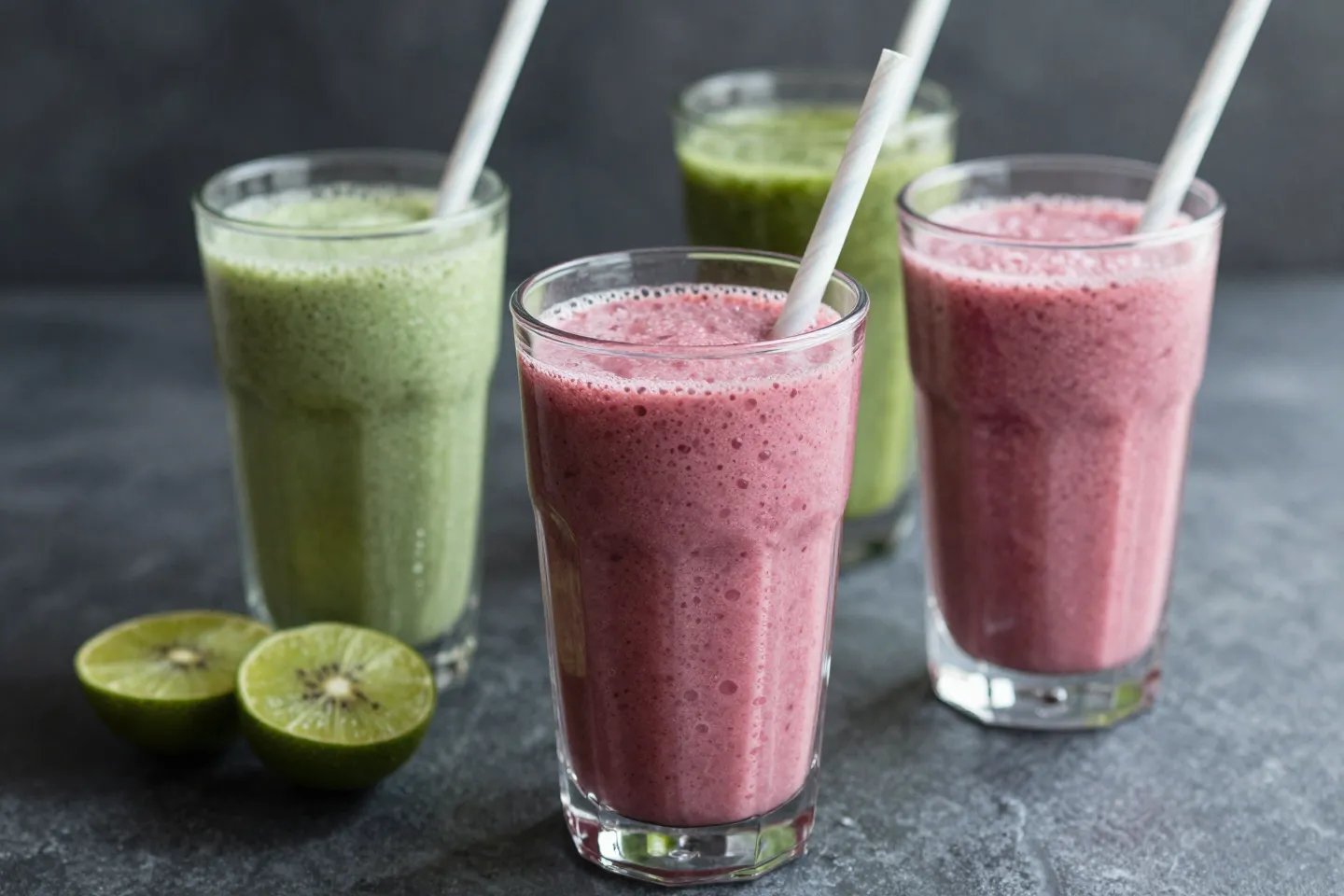
1) Berry-C Bright Skin Smoothie
- 1 cup unsweetened almond milk
- 1 cup frozen mixed berries
- 1 kiwi, peeled
- 1 handful spinach
- 1 tbsp chia seeds
- 1 tsp grated ginger
Blend until smooth. Why it works: Berries + kiwi load you with vitamin C and antioxidants. Chia brings omega-3s for calmer skin.
2) Pineapple Glow-Up
- 1 cup coconut water
- 1 cup frozen pineapple
- 1/2 avocado
- 1 tbsp ground flaxseed
- Small handful cilantro or mint (optional, but refreshing)
Creamy, tropical, and not too sweet. Why it works: Pineapple’s bromelain may help with puffiness, and avocado’s healthy fats support your skin barrier.
3) Green Goddess (That Actually Tastes Good)
- 1 cup kefir or plain yogurt + splash of water
- 1 cup spinach
- 1/2 cucumber
- 1/2 green apple
- Juice of 1/2 lemon
- 1 tbsp hemp hearts
Zippy and fresh. Why it works: Kefir brings probiotics, which your gut loves. Lemon and apple brighten the flavor and deliver vitamin C.
4) Chocolate Collagen Shake (Dessert Vibes)
- 1 cup unsweetened almond milk
- 1 frozen banana
- 1 tbsp cacao powder
- 1 scoop collagen (optional)
- 1 tbsp almond butter
- Pinch cinnamon
Tastes like a treat, acts like skincare. Why it works: Cacao = antioxidants; almond butter = vitamin E; collagen supports skin structure (FYI, it’s not magic, but solid).
5) Turmeric Sunshine Smoothie
- 1 cup orange juice (fresh or not-from-concentrate) or water + 1 orange
- 1/2 cup frozen mango
- 1/2 cup carrot slices (frozen or steamed, then cooled)
- 1 tsp turmeric + pinch black pepper
- 1 tsp honey (optional)
Bright and sippable. Why it works: Beta-carotene from carrots converts to vitamin A, and turmeric brings anti-inflammatory swagger.
Ingredient Spotlight: What Actually Helps
Because “superfood” is overused, here’s what’s worth your time.
- Berries: High in anthocyanins = big antioxidant energy for stressed skin.
- Kiwi and citrus: Vitamin C champions for collagen production.
- Leafy greens: Folate and minerals help cell turnover. Spinach blends smoother than kale.
- Seeds (chia, flax, hemp): Omega-3s to reduce redness and support your barrier.
- Avocado and nuts: Vitamin E and healthy fats for that dewy look without highlighter.
- Ginger and turmeric: Anti-inflammatory support, especially after salty dinners or stressy weeks.
- Kefir/yogurt: Probiotics to keep your gut and skin on friendly terms.
What to Skip (Most of the Time)
- Tons of added sugar: It can spike insulin and stoke inflammation. Let fruit do the sweetening.
- Fruit juice bases: Great taste, but easy to overdo. Cut with water or choose whole fruit.
- Random “detox” powders: Your liver already detoxes. Save your money for good produce.
Timing, Portion, and Mixing Tips
You don’t need a stopwatch or a calorie spreadsheet, but a little strategy helps.
- Best timing: Morning or post-workout gives you energy and hydration early.
- Portion size: Aim for 12–16 oz. If it’s a meal, add protein and fat so you stay full.
- Blend order: Liquids first, then soft stuff, then frozen. Your blender will thank you.
- Make-ahead: Freeze pre-portioned smoothie bags. Dump and blend when needed.
- Texture rescue: Too thick? Add liquid. Too thin? Add frozen fruit or 1/4 cup oats.
Skin Goals: Match Smoothies to Your Needs
Pick your glow-up based on what your skin begs for today.
If you’re dealing with breakouts
- Focus on: Berries, greens, flax or chia, kefir
- Avoid: Big sugar bombs. Keep it balanced with fat/protein.
If your skin feels dry or dull
- Focus on: Avocado, almond butter, coconut water, cucumber
- Add: Vitamin C fruits like kiwi or pineapple for brightness.
If redness is your nemesis
- Focus on: Turmeric + black pepper, ginger, omega-3 seeds, berries
- Keep it gentle: Skip large amounts of citrus if you’re sensitive.
Real Talk: Smoothies Help, But They’re Not Photoshop
I love a glowy smoothie moment as much as anyone, but let’s be honest. If you sleep four hours, never wash your face, and live on fries, no blender can save you. Pair smoothies with the basics.
- Hydrate: Aim for at least 6–8 cups of water daily.
- Protein and color: Eat balanced meals with veggies and some protein.
- Skincare basics: Gentle cleanse, moisturizer, sunscreen. That’s 90% of it, IMO.
- Watch triggers: For some folks, dairy or super sugary foods can flare skin. Test and learn.
FAQ
Can smoothies cure acne?
Nope. They can support clearer skin by reducing inflammation and improving nutrient intake, but acne has many causes—hormones, genetics, skincare, stress. Use smoothies as part of a bigger plan, not the only plan.
Is frozen fruit less healthy?
Frozen fruit is usually picked ripe and frozen fast, which locks in nutrients. It often beats the sad, out-of-season fresh stuff. Plus, it makes smoothies thick and cold without ice. Win-win.
How much sugar is too much in a smoothie?
Keep total fruit to about 1–1.5 cups and pair it with fat, fiber, and protein. That combo keeps blood sugar steadier and your skin happier. If you want sweeter, add cinnamon or a tiny drizzle of honey.
Do I need protein powder?
Not mandatory. You can use Greek yogurt, kefir, hemp seeds, or collagen. If you like powders, pick one with short ingredients and no weird sweeteners that upset your stomach.
What blender should I use?
Any decent blender works. If yours struggles, blend greens with liquid first, then add frozen fruit. It’s not a cooking show; we just want it smooth enough to drink without chewing.
Can I drink a smoothie every day?
Totally. Rotate ingredients so you don’t overdo the same foods and to keep nutrients varied. Your skin loves diversity, your taste buds do too.
Conclusion
Clear skin smoothies don’t require a wellness budget or rare powders. Keep it real: fruit, greens, healthy fats, and a couple of boosters. Blend one most days, stay hydrated, and nail the basics. Your skin will show up to the party—glowy, calm, and a little smug about it.