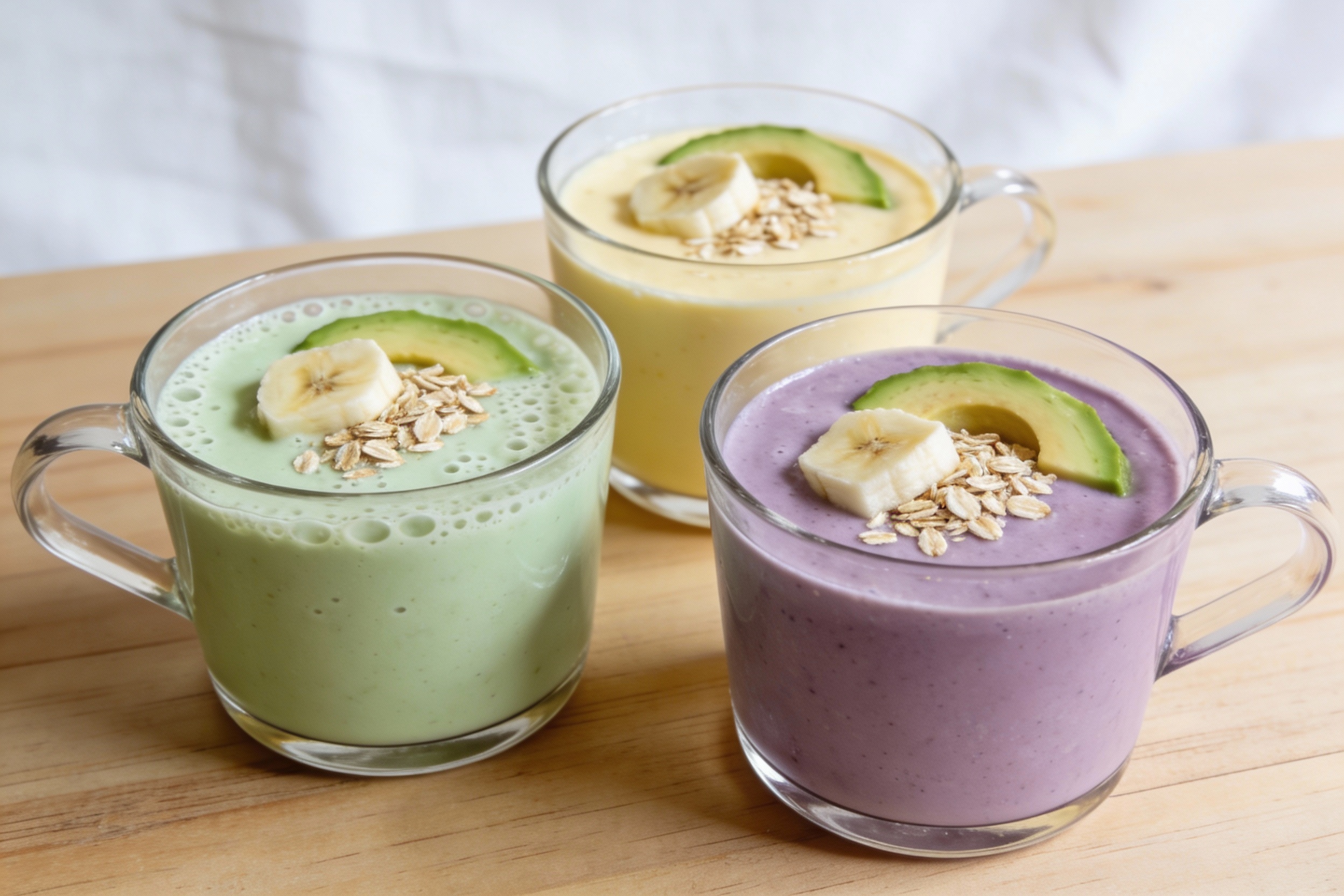
Your stomach throws tantrums at the slightest provocation? Same. When your gut feels touchy, smoothies can save the day—if you blend them right. Think gentle ingredients, easy textures, and zero drama. Let’s build blends that soothe, not sabotage.
Why Smoothies Work for Sensitive Stomachs
Smoothies take the heavy lifting off your digestive system because you pre-chew the food with your blender. Less work for your gut means less discomfort. You control the ingredients, texture, and portion size.
They also let you sneak in nutrients you might skip otherwise. Fiber, hydration, electrolytes—check, check, check. Just skip the kitchen-sink approach and keep it simple. Your gut loves simple.
Core Rules for Gut-Friendly Blends
Start low and slow: Try smaller servings (8–10 oz) at first. Then build up if your gut behaves.
Keep the ingredient list short: Three to five ingredients. Max. More variety can wait until your stomach trusts you again.
Pick gentle fiber: Choose soluble fiber (oats, chia, flax, psyllium in tiny amounts) over rough insoluble fiber (kale stems, raw crucifers).
Mind the temperature: Too cold can cramp. Let smoothies sit for a few minutes if you use frozen fruit.
Blend super smooth: Go for a silky texture. No chunky surprises. Your stomach hates surprises.
Foods That Usually Play Nice
- Base liquids: lactose-free milk, oat milk, almond milk, coconut water, ginger tea, peppermint tea
- Fruits: banana, peeled apple, ripe pears, blueberries, mango, papaya, canned peaches in juice
- Gentle fats: peanut butter powder, smooth peanut/almond butter (1 tsp), avocado
- Protein: lactose-free yogurt, kefir, collagen peptides, pea protein isolate (unflavored), silken tofu
- Soothers: ginger, cinnamon, turmeric (a pinch), peppermint, aloe juice (inner fillet only)
- Fiber boosters: ground flax, chia (1 tsp to start), rolled oats (soaked)
Foods That Often Backfire (IMO, proceed with caution)
- Raw kale, raw spinach in big amounts (oxalates + roughage)
- High-FODMAP fruit bombs: apples with skin, big dates, watermelon
- Dairy if you’re lactose-sensitive (use lactose-free instead)
- Artificial sweeteners (sorbitol, mannitol, sugar alcohols = bloat city)
- Huge doses of seeds, bran, or raw cruciferous veg
5 Easy-to-Tolerate Smoothie Blueprints
Each serves 1. Blend until completely smooth. Add ice only if your stomach handles cold.
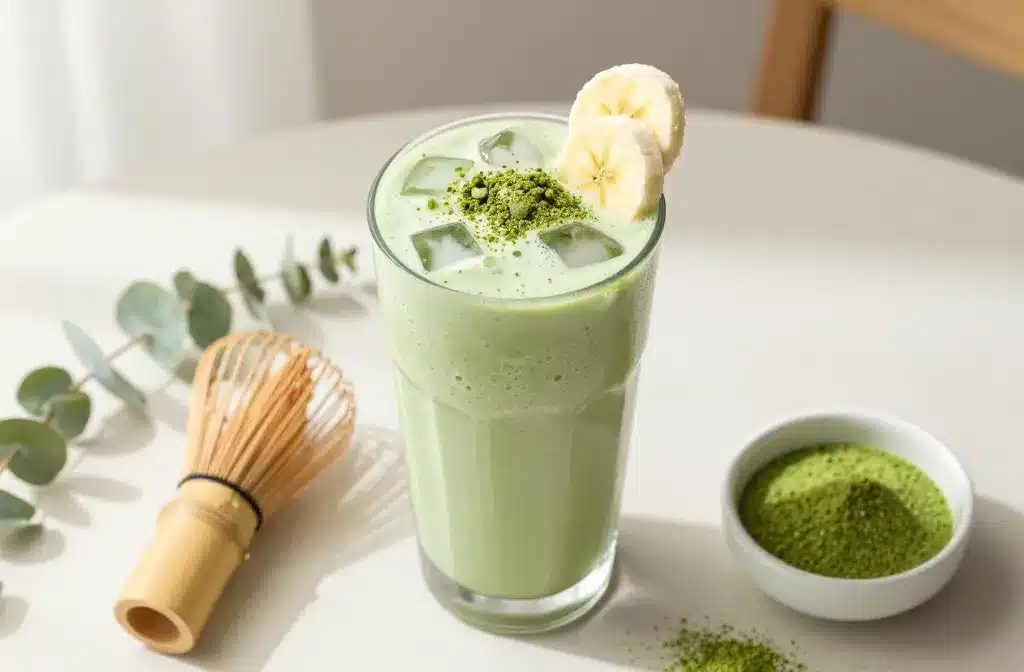
1) Banana Oat Belly Hug
- 1 small ripe banana
- 1/4 cup rolled oats (soak in hot water 10 minutes first)
- 3/4–1 cup lactose-free milk or oat milk
- 1/2 tsp cinnamon
- Optional: 1 tsp peanut butter or PB powder
Why it works: Soluble fiber from oats + banana’s pectin equals gentle digestion and steady energy.
2) Blueberry Ginger Calm-Down
- 3/4 cup blueberries (fresh or thawed)
- 1/2 cup lactose-free yogurt or kefir
- 1/2–3/4 cup water or almond milk
- 1 tsp fresh grated ginger (start with 1/2 tsp if sensitive)
- Optional: 1 tsp ground flax
Why it works: Ginger helps nausea, blueberries bring antioxidants without too much fiber. Smooth and soothing.
3) Papaya Peach Peacekeeper
- 1/2 cup papaya, cubed
- 1/2 cup canned peaches in juice (drained)
- 3/4 cup coconut water
- 1 tbsp collagen peptides (unflavored)
- Pinch of sea salt if you need electrolytes
Why it works: Papaya’s enzymes can support digestion, and coconut water hydrates. Light and sunny.
4) Creamy Mango Tummy Tonic
- 3/4 cup ripe mango
- 1/4 small avocado
- 3/4–1 cup almond milk
- Squeeze of lime
- Optional: pinch turmeric + black pepper
Why it works: Avocado adds gentle fat for satiety without heaviness. Mango blends ultra-smooth.
5) Apple Pie (No Drama) Smoothie
- 1/2 peeled apple, chopped
- 1/4 cup soaked oats
- 3/4 cup lactose-free milk
- 1/2 tsp cinnamon, pinch nutmeg
- Optional: 1 tsp maple syrup if you need sweeter
Why it works: Peeled apple reduces rough fiber, while oats keep things gentle and cozy.
Tweak It: Customize Without Upsetting Your Gut
Adjust sweetness: Use ripe fruit first. If you need more, add a splash of maple syrup or a date half. Skip sugar alcohols.
Boost protein smartly: Try collagen, lactose-free whey isolate, or pea protein isolate. Start with half a scoop. Some blends can feel chalky—blend longer.
Go low-FODMAP if needed: Choose bananas (firmer = lower FODMAP), blueberries, strawberries, oranges, and kiwi. Use lactose-free dairy or plant milks.
Texture hacks: Blend oats and liquid first for 30 seconds, then add fruit. You’ll get barista-level smoothness.
What if you’re sensitive to fat?
Keep nut butters to 1 teaspoon or skip. Use avocado sparingly. Choose collagen over higher-fat dairy. Smaller portions help too.
Timing, Portions, and Pairings
When to drink: Mornings or midday work best. Drinking right before bed can cause reflux for some.
Portion sweet spot: 8–12 ounces. If you finish and feel great, you can always make more. If you feel “meh,” shrink the next one.
Smart pairings: If blood sugar swings bug you, add a small side like rice cake with peanut butter or a boiled egg. Gentle protein + carbs keeps you steady.
Hydration and Electrolytes
If your stomach has been acting up (hi, IBS or a recent bug), hydration counts. Coconut water, diluted juice, or a pinch of salt in your smoothie helps. You can also brew ginger or peppermint tea as your liquid and chill it. Spa day for your GI tract.
Common Mistakes That Make Smoothies Rough
- Using too many ingredients: It’s a smoothie, not a group project.
- Going too cold: Frozen bricks can shock your stomach. Let it warm slightly.
- Too much fiber at once: A heap of chia will backfire. Start with 1 tsp.
- Forgetting protein: Straight fruit can spike and crash your energy. Add a small protein source.
- Chugging: Sip slowly. Your gut likes manners.
Gentle Add-Ins That Actually Help
- Ginger: Calms nausea and gas. Fresh tastes best.
- Cinnamon: Adds warmth and may help blood sugar control. Plus, dessert vibes.
- Peppermint tea: Light, cooling, soothing. FYI, it can trigger reflux for some—test carefully.
- Aloe vera (inner fillet only): Start with 1–2 tbsp. Avoid whole-leaf; it can act like a laxative. IMO, keep it occasional.
- Psyllium husk: 1/2 tsp for extra soluble fiber if constipation visits. Drink extra water.
FAQ
Can smoothies actually reduce bloating?
They can help if you keep ingredients simple and low-FODMAP, blend very smooth, and watch portion size. Soluble fiber from oats or chia (tiny amounts) can regulate digestion. But if you cram in raw greens, sugar alcohols, and three protein powders, expect fireworks.
What’s the best protein powder for sensitive stomachs?
Collagen peptides and lactose-free whey isolate usually go down easy. Pea protein isolate works for many, but test a half scoop first to avoid gassiness. Skip blends with lots of gums and sweeteners—your gut probably won’t send a thank-you note.
Are green smoothies off-limits?
No, but go gentle. Use tender greens like baby spinach, and keep the portion small (a small handful). Steam and cool the greens if you’re extra sensitive. Blend longer for silky texture and pair with soothing fruit like banana or mango.
How can I make my smoothie more filling without wrecking my stomach?
Add a small protein dose (collagen or lactose-free yogurt), a teaspoon of nut butter, and soluble fiber like soaked oats. That combo gives staying power without heavy bloat. Keep fats modest and fiber gradual.
Is dairy totally out?
If lactose bothers you, choose lactose-free milk or yogurt. Many people tolerate kefir better thanks to its live cultures. Start small and see how you feel—your gut gets the final vote.
What if cold drinks upset my stomach?
Use room-temp ingredients and no ice. Let frozen fruit thaw first or choose canned fruit in juice (drained). Warmish “smoothies” made with ginger or chamomile tea can feel surprisingly cozy.
Wrapping It Up (Gently)
You don’t need a chemistry degree to make gut-friendly smoothies—just thoughtful choices and a blender that doesn’t scream at 6 a.m. Keep recipes simple, blend until silky, and start with smaller portions. Your stomach wants calm, not chaos. Build trust sip by sip, and you’ll have a go-to lineup of blends your body actually thanks you for. FYI, the Banana Oat Belly Hug is elite—IMO, it’s the comfort blanket of smoothies.