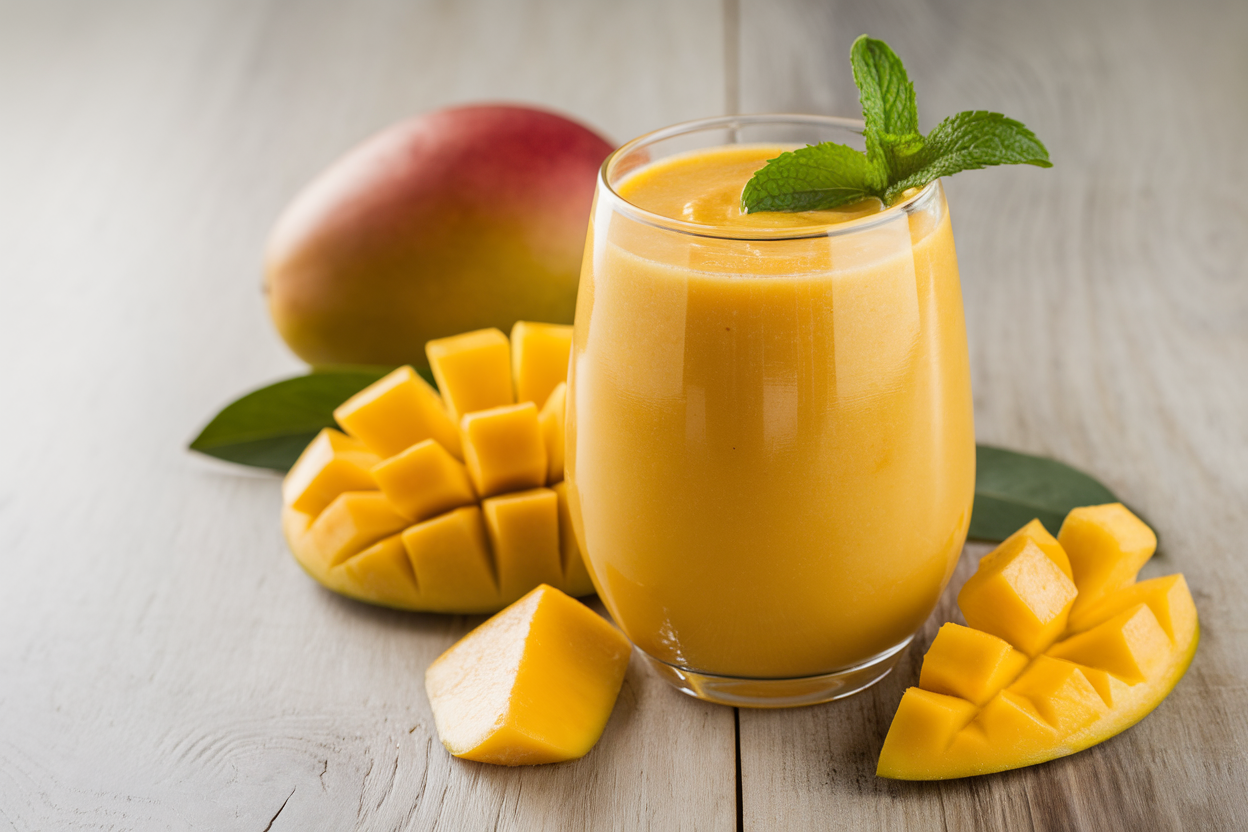
5-Minute Mango Smoothie
Need a fast breakfast, a lazy afternoon pick-me-up, or an excuse to use that bag of frozen mango? This 5-Minute Mango Smoothie is the kind of recipe that makes you feel oddly productive for almost no effort. It’s bright, creamy, sweet, and ridiculously easy to tweak. Basically, it’s the blender win you can count on when your brain says “snack” but your energy says “absolutely not.”
1. The Simple Magic of a 5-Minute Mango Smoothie
A good smoothie should feel easy, not like a chemistry project with 14 ingredients and a motivational speech. That’s why a 5-Minute Mango Smoothie works so well. You toss a few things into a blender, hit a button, and suddenly you have something that tastes cheerful.
Mango is the star here for a reason. It has that naturally rich, silky texture that makes smoothies taste almost fancy, even when you threw it together in pajama pants. Fresh mango works, but frozen mango really shines because it chills and thickens the smoothie at the same time.
At its most basic, this smoothie needs just a few ingredients:
- 2 cups frozen mango chunks
- 1 banana
- 3/4 to 1 cup milk of choice
- 1/2 cup yogurt
- A little honey or maple syrup if needed
That’s it. Seriously. You can stop there and still end up with a smoothie that feels like a tiny vacation.
To make it, add the liquid first. Then the yogurt, banana, and mango. Blend until smooth. If it looks too thick, add a splash more milk. If it looks too thin, add a few more frozen mango chunks or a couple of ice cubes.
The biggest appeal here is speed. You don’t need advanced prep. You don’t need specialty powders with names that sound like they came from a sci-fi movie. You need a blender and five minutes. Maybe less if you move with purpose.
Quick tip: If your smoothie tastes flat, add a tiny squeeze of lime juice or a pinch of salt. It wakes everything up fast without making the smoothie taste weird.
2. Your Go-To Ingredient Lineup for the Best Blend
The difference between an okay smoothie and a “wait, this is actually amazing” smoothie usually comes down to ingredient balance. You want sweetness, creaminess, enough liquid to blend, and enough frozen fruit to keep it cold and thick.
Let’s break down the main players.
Mango: Frozen mango chunks are the easiest option. They’re convenient, affordable, and ready whenever you are. Fresh mango gives great flavor too, but you’ll probably want to add ice if you want that frosty texture.
Banana: This adds body and natural sweetness. If you don’t love banana flavor, use half a banana instead of a whole one. It still helps with texture without taking over.
Milk: Use what you like. Dairy milk gives a classic creamy result. Almond milk keeps it lighter. Oat milk makes it extra smooth. Coconut milk adds a tropical vibe, which honestly feels right with mango.
Yogurt: Plain or vanilla yogurt adds creaminess and a little tang. Greek yogurt makes the smoothie thicker. Regular yogurt keeps it softer and more pourable.
Sweetener: Sometimes ripe mango and banana already do the job. If not, add a teaspoon or two of honey, maple syrup, or even a date.
Here’s a reliable formula to remember:
- 2 cups frozen fruit
- 1 cup liquid
- 1/2 cup creamy base
- 1 small sweetener boost, only if needed
That ratio gives you a smoothie that blends well without turning into mango soup. Because no one wants that.
You can also add flavor boosters if you want to level it up:
- A splash of orange juice for brightness
- A pinch of cinnamon for warmth
- A little vanilla extract for dessert energy
- A spoonful of shredded coconut for tropical flavor
The key is not to overload the blender with random “healthy” extras. IMO, once you add six bonus ingredients, the smoothie starts losing the thing that made it good in the first place. Mango should still taste like mango.
Quick tip: Taste before you sweeten. Very ripe banana and frozen mango can already be plenty sweet, and overdoing it makes the smoothie lose that fresh, fruity feel.
3. How to Make It Thick, Creamy, and Actually Delicious
Texture matters. A lot. A mango smoothie should feel smooth and luscious, not watery, foamy, or weirdly chunky. If your smoothie game has ever gone wrong, it usually happened here.
The first trick is ingredient order. Add liquid to the blender first so the blades can move freely. Then add softer ingredients like yogurt and banana. Put frozen mango on top. That setup helps everything blend faster and more evenly.
The second trick is patience. Blend long enough. A lot of people stop too soon, then act betrayed by a lumpy smoothie. Give it another 20 to 30 seconds. Trust me.
Here’s the basic method:
- Pour 3/4 cup milk into the blender.
- Add 1/2 cup yogurt.
- Add 1 banana.
- Add 2 cups frozen mango.
- Blend until smooth.
- Check the texture and adjust.
If it’s too thick and the blender struggles, add milk one tablespoon at a time. If it’s too thin, add more frozen mango. If you only have fresh mango, use a handful of ice cubes, but not too many or the flavor gets watered down.
Want a super thick smoothie you can eat with a spoon? Use less milk and more frozen mango. You can even pour it into a bowl and top it with sliced fruit, granola, or coconut flakes. Suddenly it’s a smoothie bowl, and yes, it feels more impressive than it should.
Want it extra creamy? Freeze your banana ahead of time. This makes the smoothie colder and silkier. It also helps if your yogurt is thick to begin with.
And if your blender isn’t exactly high-powered, no problem. Let the frozen mango sit out for 3 to 5 minutes before blending. That little pause can save your blender from sounding like it’s filing a complaint.
Quick tip: Don’t add too much ice unless you really need it. Ice bulks up the smoothie, but too much makes the flavor bland fast. Frozen fruit gives a much better result.
4. Fun Flavor Twists When You Want More Than Basic
The classic version is great, but mango also plays very nicely with other flavors. So if you want to keep things interesting without complicating your life, this is where the fun starts.
One easy twist is a mango-pineapple smoothie. Add 1/2 cup frozen pineapple and use coconut milk. It tastes bright, tropical, and a little like you should be drinking it near a pool instead of answering emails.
Another solid option is mango-strawberry. Swap half the mango for frozen strawberries. The color gets prettier, and the flavor turns sweet and slightly tangy.
If you like citrus, make it a mango-orange smoothie. Replace part of the milk with orange juice. Not all of it, though. Too much juice can make the smoothie thin and sharp instead of creamy.
For a richer vibe, try mango-lassi inspired. Use plain yogurt, a little milk, mango, and a pinch of cardamom. It’s simple, fragrant, and feels a bit special without becoming fussy.
You can also go green, if that’s your thing. Add a small handful of spinach. Start small. Mango covers the flavor surprisingly well, and you still get a bright, fruity smoothie instead of something that tastes like lawn clippings.
Here are a few easy combo ideas:
- Mango + pineapple + coconut milk
- Mango + strawberry + vanilla yogurt
- Mango + orange juice + banana
- Mango + peach + Greek yogurt
- Mango + lime + coconut flakes
The best part? You don’t need a brand-new recipe every time. Just keep the same basic ratio and swap one ingredient. That’s how you stay creative without ending up with a blender full of regret.
One caution: don’t add every tropical fruit at once just because it sounds exciting. Mango, pineapple, banana, coconut, orange juice, yogurt, chia, ginger, and three supplements? That’s not a smoothie. That’s a dare.
Quick tip: When trying a new variation, change only one or two things at a time. That way, if it turns out amazing, you can actually repeat it instead of guessing what worked.
5. Smart Prep, Storage, and Everyday Smoothie Shortcuts
If you want this smoothie to become part of your real life instead of a one-time kitchen moment, prep helps. Not intense meal-prep influencer prep. Just a few simple tricks that make the whole thing easier.
The easiest shortcut is making smoothie packs. Add frozen mango and banana slices to freezer bags or containers in single portions. When you want a smoothie, dump one pack into the blender, add milk and yogurt, and blend. Minimal effort, maximum payoff.
You can also prep fresh mango in advance if you bought a bunch. Peel it, cube it, and freeze it on a tray before transferring it to a bag. That keeps the pieces from freezing into one giant fruit brick.
If you have leftovers, store the smoothie in a sealed jar in the fridge and drink it within a day. It may separate a bit, which is normal. Just shake it well before drinking. The texture is always best right after blending, though, so don’t expect day-two leftovers to have the exact same magic.
Want to make it ahead for the morning? Pre-load the blender jar with the refrigerated ingredients and keep the frozen fruit portioned separately in the freezer. In the morning, combine and blend. It saves time and keeps the smoothie cold and fresh.
A few small habits make a big difference:
- Keep frozen mango stocked at all times
- Slice and freeze ripe bananas before they go too soft
- Clean the blender right after using it
- Write your favorite ratio down somewhere obvious
And please, clean the blender immediately. Fill it with warm water, add a drop of soap, and blend for a few seconds. Done. Because dried smoothie cement is not the kind of challenge anyone needs before noon.
This recipe also scales easily. Making one serving? Stick with the basic amounts. Making enough for two? Double everything. Just don’t overfill the blender unless you enjoy cleaning smoothie off your countertop.
Quick tip: If your smoothie sits for a few minutes and thickens too much, just stir in a splash of milk. Instant fix, no drama.
A 5-Minute Mango Smoothie really earns its name. It’s quick, flexible, and way more satisfying than it has any right to be for so little work. Once you learn the basic formula, you can keep it simple or mix it up depending on your mood. So grab the blender, use the frozen mango, and make your day a little colder and better.