Papaya Smoothie for Gut Health That Feels Light and Refreshing
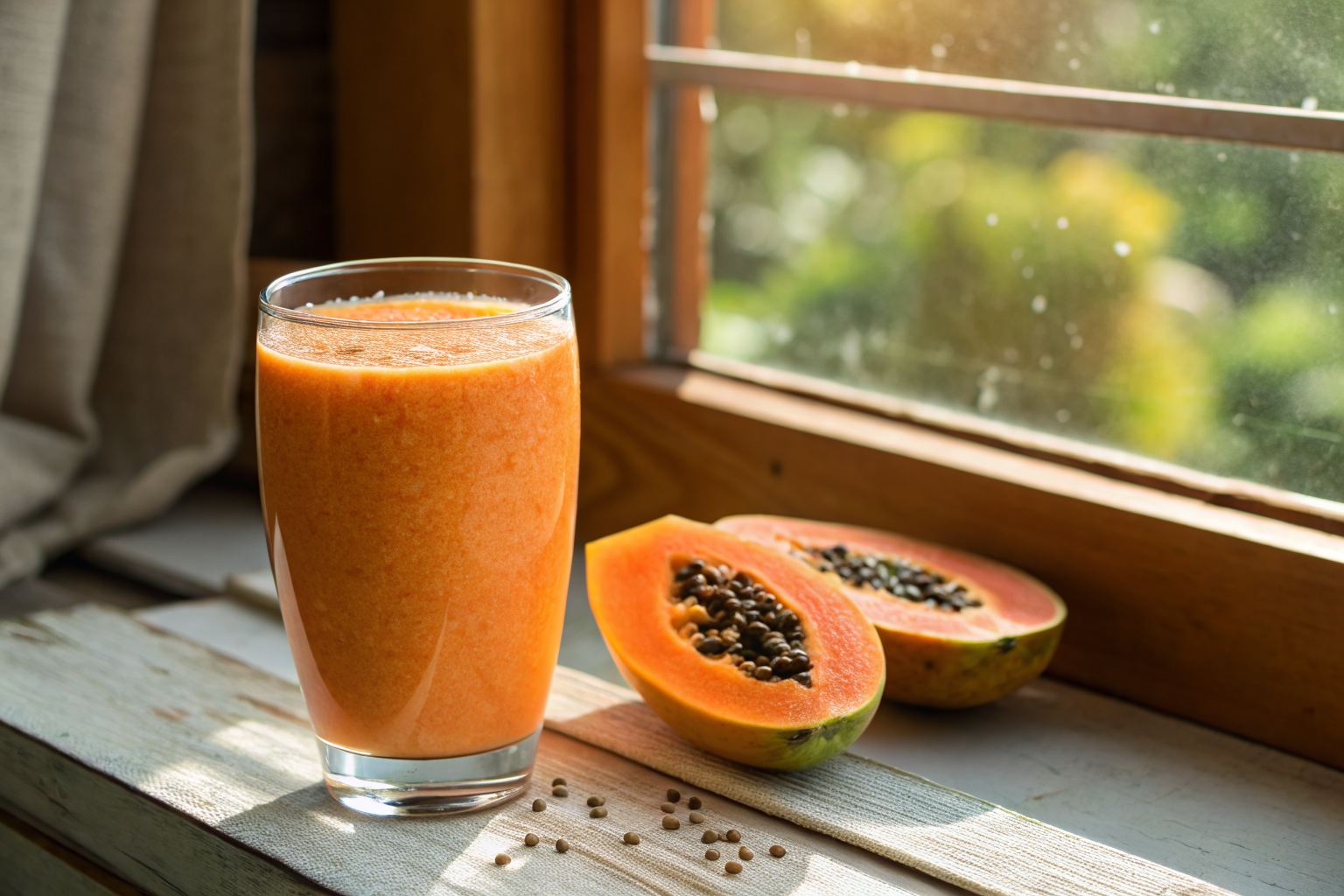
Your gut doesn’t always need a dramatic reset. Sometimes it just wants something gentle, cool, and easy to deal with. That’s where a papaya smoothie comes in: light, refreshing, and surprisingly good at making your stomach feel less grumpy.
If you’ve ever wanted a smoothie that doesn’t sit in your belly like a brick, this one deserves a spot in your routine. It’s simple, tasty, and yes, your digestive system might actually thank you for once.
Why papaya works so well for gut health
Papaya has a bit of a reputation as a “digestion fruit,” and honestly, it earns it. One reason is an enzyme called papain, which helps break down protein. That means your body gets a little extra support when digesting heavier meals, especially if your stomach tends to complain afterward.
It’s also rich in water and contains fiber, which is a pretty nice combo for keeping things moving without feeling overly heavy. Not the most glamorous topic, sure, but gut health is basically built on boring little wins like hydration and fiber.
Papaya is also naturally soft, mellow, and easy on the stomach. Unlike some super-acidic fruits that taste amazing but can make your gut feel like it’s being lightly attacked, papaya is usually gentler. That’s a big reason it works so well in a smoothie meant to feel refreshing instead of intense.
What makes this smoothie feel so light
Some smoothies are basically dessert wearing activewear. Delicious? Absolutely. Light and gut-friendly? Not always.
A papaya smoothie can stay airy and easy if you keep the ingredients simple. The trick is to avoid piling in too many extras that turn it into a thick, sugary bomb. You want hydration, mild sweetness, and ingredients that support digestion instead of overwhelming it.
The best part? Papaya blends into a silky texture without needing a ton of banana, yogurt, or nut butter. So you still get a creamy drink, but it won’t feel like a full meal unless you want it to.
A simple papaya smoothie recipe for gut health
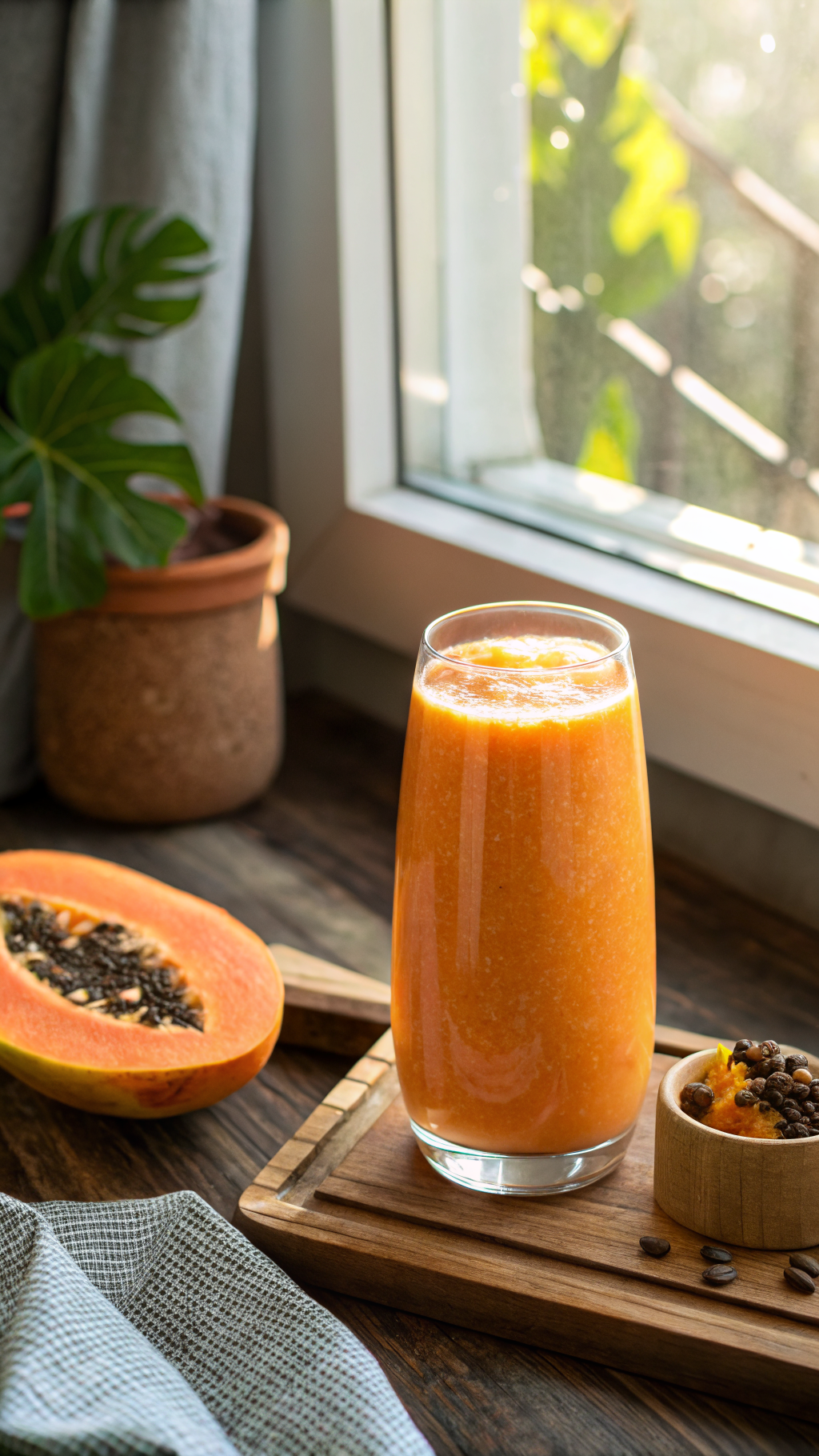
Here’s the version I like when I want something refreshing that won’t make me regret my life choices 20 minutes later.
Ingredients
- 1 1/2 cups ripe papaya, cubed
- 1/2 cup plain kefir or plain yogurt
- 1/2 cup cold water or coconut water
- 1/2 small banana
- 1 teaspoon fresh lime juice
- 1/2 inch fresh ginger, peeled
- A few ice cubes
- Optional: 1 teaspoon chia seeds
How to make it
Add everything to a blender and blend until smooth. That’s it. No mystical wellness ritual required.
If you want it thinner, add a splash more water or coconut water. If you want it colder, toss in more ice. Very high-tech stuff.
Why these ingredients help
Papaya is the star, obviously. It brings fiber, hydration, and that digestive enzyme magic.
Kefir or yogurt adds probiotics, which can support a healthy gut microbiome. If your stomach handles dairy well, this is a great addition. If not, use a dairy-free probiotic yogurt and move on with your day.
Ginger is a small ingredient with a big personality. It can help with nausea, bloating, and that weird “my stomach is unsettled and I don’t know why” feeling.
Lime juice brightens the flavor without making the smoothie too sweet. Coconut water can add extra hydration, which your digestive system generally appreciates, even if it doesn’t send a thank-you card.
Easy ways to customize it
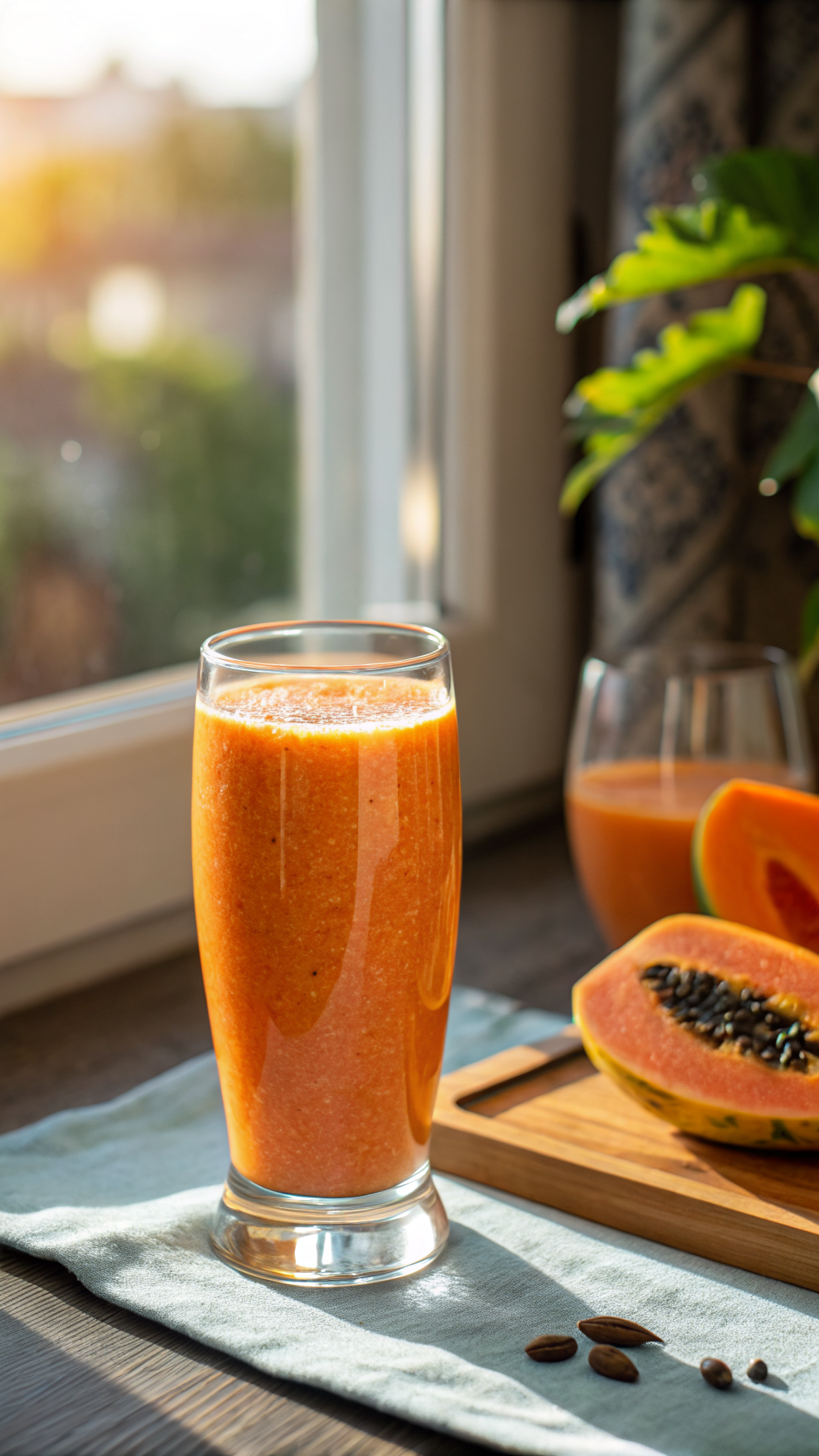
If you want more fiber, add chia seeds or a spoonful of ground flax. Just don’t go overboard if your gut is already sensitive. More isn’t always better, despite what wellness people on the internet love to imply.
If you want it sweeter, add a couple of pineapple chunks or half a date. Papaya is naturally sweet, though, so taste it first. IMO, it’s better when it stays fresh and subtle instead of turning candy-like.
If dairy doesn’t work for you, use coconut yogurt or skip yogurt entirely and keep it juice-based. It’ll be even lighter that way, which can be perfect on hot mornings or after a heavy meal.
Best time to drink it
This smoothie works especially well in the morning when you want something easy but not boring. It’s also a solid afternoon option if your stomach feels off and you want a snack that doesn’t make things worse.
After a rich meal, a smaller serving can feel pretty nice too. Not as a cure-all, obviously, but as a gentle reset. FYI, if your gut is seriously unhappy all the time, a smoothie is not a substitute for actual medical advice.
A couple of tips so it actually tastes good
Use ripe papaya. This matters a lot. If it’s underripe, the flavor can be weirdly musky and not in a fun, tropical way.
A squeeze of lime helps balance the sweetness and makes the whole thing taste brighter. Ginger also keeps it from feeling flat. Tiny ingredients, big payoff.
And serve it cold. A lukewarm papaya smoothie sounds like punishment, not self-care.
FAQ
Is papaya really good for digestion?
Yes, for many people. Papaya contains papain, an enzyme that helps break down proteins, plus fiber and water that support regular digestion.
Can I make this smoothie without yogurt?
Absolutely. Use coconut water, almond milk, or just water for a lighter version. You can also use a dairy-free probiotic yogurt if you still want that gut-friendly boost.
Is this smoothie good for bloating?
It can be, especially if bloating comes from heavy meals or sluggish digestion. Papaya and ginger are both known for being gentle and supportive, though everyone’s gut has its own drama.
Can I drink a papaya smoothie every day?
Usually, yes, as long as it fits your overall diet and your body responds well to it. Keeping the ingredients simple helps prevent it from becoming too sugary or too heavy.
What fruits pair best with papaya for gut health?
Banana, pineapple, and mango can work well in small amounts. For a lighter, more digestion-friendly smoothie, banana and a little lime are usually the safest bets.
Conclusion
A papaya smoothie for gut health is one of those rare healthy things that actually feels pleasant and easy. It’s refreshing, simple to make, and gentle enough for days when your stomach needs a little kindness. Keep it light, use ripe fruit, and let papaya do its thing.