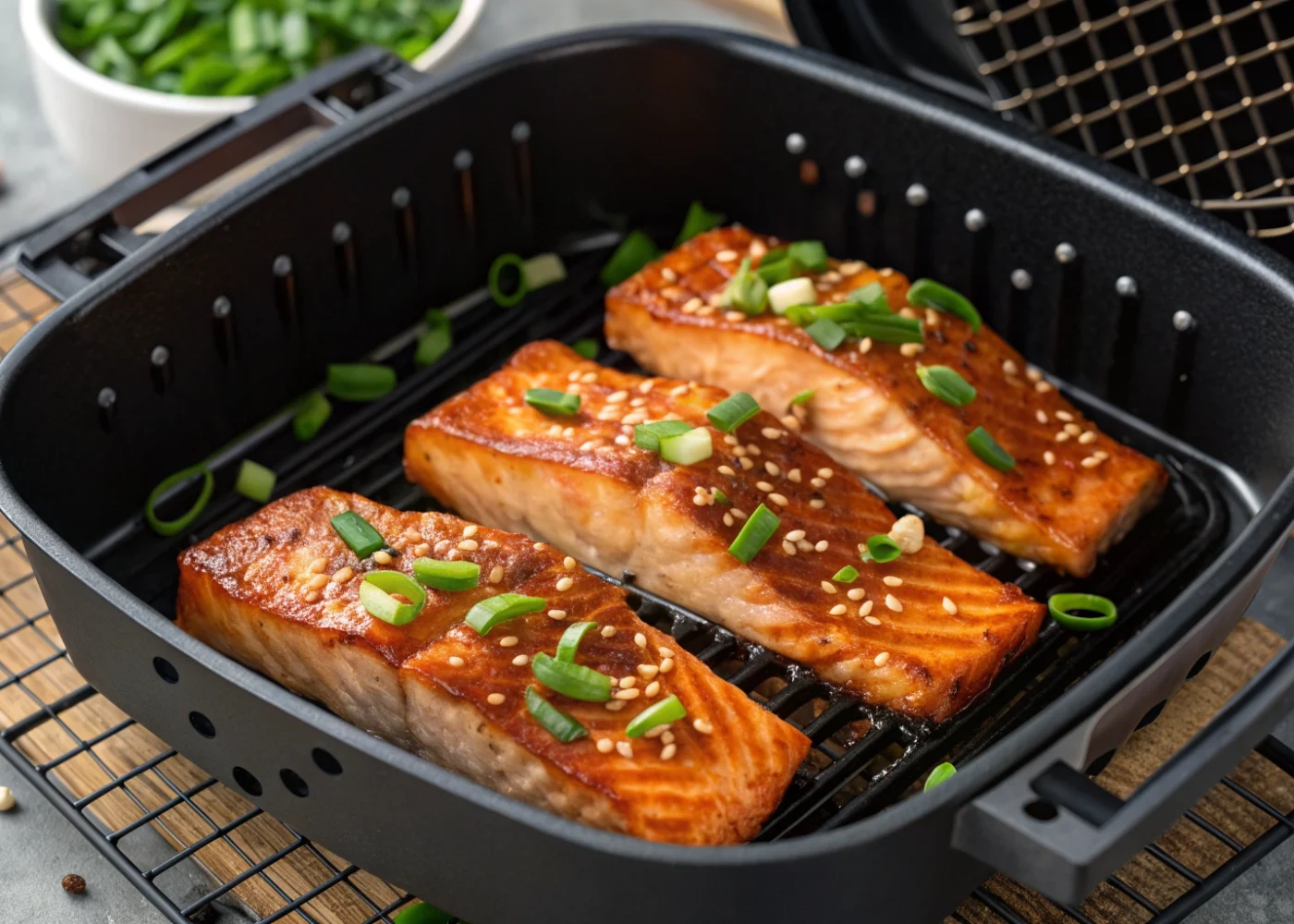
Glossy honey-garlic glaze, tender flakes of salmon, and a generous scatter of scallions make this an easy dinner with plenty of flavor. The scallion whites soften into the sauce, while the fresh green tops add a little crunch. Brushing on the glaze toward the end gives it time to turn sticky without exposing the honey and garlic to the full cooking time.
Yield: 4 servings Estimated time: 25–30 minutes, including preparation and preheating, assuming all four fillets fit in one spaced layer. Allow approximately 8–12 minutes of cooking per batch; each additional batch adds roughly that much time. Comparable air-fryer methods cook salmon at 400°F (204°C), with timing varying by fillet thickness and appliance.
Ingredients
- 4 salmon fillets, about 6 ounces each and approximately 1 inch thick, skin-on or skinless, fully thawed
- 1 teaspoon neutral oil, such as avocado or canola oil, plus a little for the basket
- ¼ teaspoon freshly ground black pepper
- 3 tablespoons honey
- 2 tablespoons low-sodium soy sauce
- 1 tablespoon fresh lemon juice
- 1 tablespoon water
- 3 medium garlic cloves, finely minced, about 1 tablespoon
- 4 scallions, trimmed and thinly sliced, white and green parts kept separate
- ¼ teaspoon crushed red pepper flakes, optional
- 1 teaspoon sesame seeds, optional
- Lemon wedges, for serving, optional
Choose fillets of similar thickness rather than focusing only on their weight. A wide, thin tail piece can finish considerably sooner than a compact center-cut portion. Skin-on salmon is convenient to lift out intact, but this recipe works with either kind.
How To Make It
- Prepare the salmon and scallions.
Pat the salmon thoroughly dry with paper towels, especially on the skin side. Check for pin bones by running a fingertip gently along the flesh; remove any with clean tweezers. Rub the fillets with the teaspoon of oil and sprinkle with black pepper. Slice the scallions, keeping their white and pale-green portions separate from the darker green tops. Prepare the sauce before starting the preheat so everything is ready when the basket is hot.
- Make the honey-garlic sauce.
Combine the honey, soy sauce, lemon juice, water, garlic, scallion whites, and optional red pepper flakes in a small saucepan. Bring to a gentle simmer over medium-low heat, stirring, then simmer for 1–2 minutes to soften the garlic and scallions slightly. Remove from the heat. The sauce should be pourable, not reduced to a thick syrup; it will become stickier on the fish.
- Separate the finishing sauce.
Pour about half the sauce into a clean bowl and set it aside for serving. Keep the remaining half for brushing onto the salmon during cooking. Use a separate clean spoon for the reserved sauce, and do not return a brush that has touched undercooked fish to it. Keeping raw seafood and its utensils separate from ready-to-eat food prevents cross-contamination.
- Preheat and arrange the fillets.
Preheat the air fryer to 400°F (204°C) according to its instructions, usually 3–5 minutes. Lightly brush the basket or crisper plate with oil. Place the salmon skin-side down, or presentation-side up for skinless pieces, leaving about ½ inch between portions. Cook everything together if it fits comfortably in a single layer; otherwise, cook only as many fillets as fit without crowding. No flipping is needed.
- Cook briefly, then glaze.
Air-fry for 5 minutes. Open the basket and spoon or brush a thin layer of the cooking sauce over each fillet, distributing the softened garlic and scallion whites across the tops rather than leaving them in large clumps. Avoid pouring excess sauce into the basket. Return the salmon to the fryer. Adding a honey glaze near the end is a useful approach for limiting scorching.
- Check early and finish carefully.
Begin checking at 6 minutes total for thin fillets, or 7 minutes for approximately 1-inch-thick portions. Continue in 1–2-minute increments as needed; plan on approximately 8–12 minutes total per batch, not a guaranteed finish time. Insert an instant-read thermometer sideways into the thickest center of each fillet. Cook to 145°F (63°C). The flesh should also separate easily into moist flakes. Remove individual portions as they finish rather than waiting for the thickest one.
- Finish and serve.
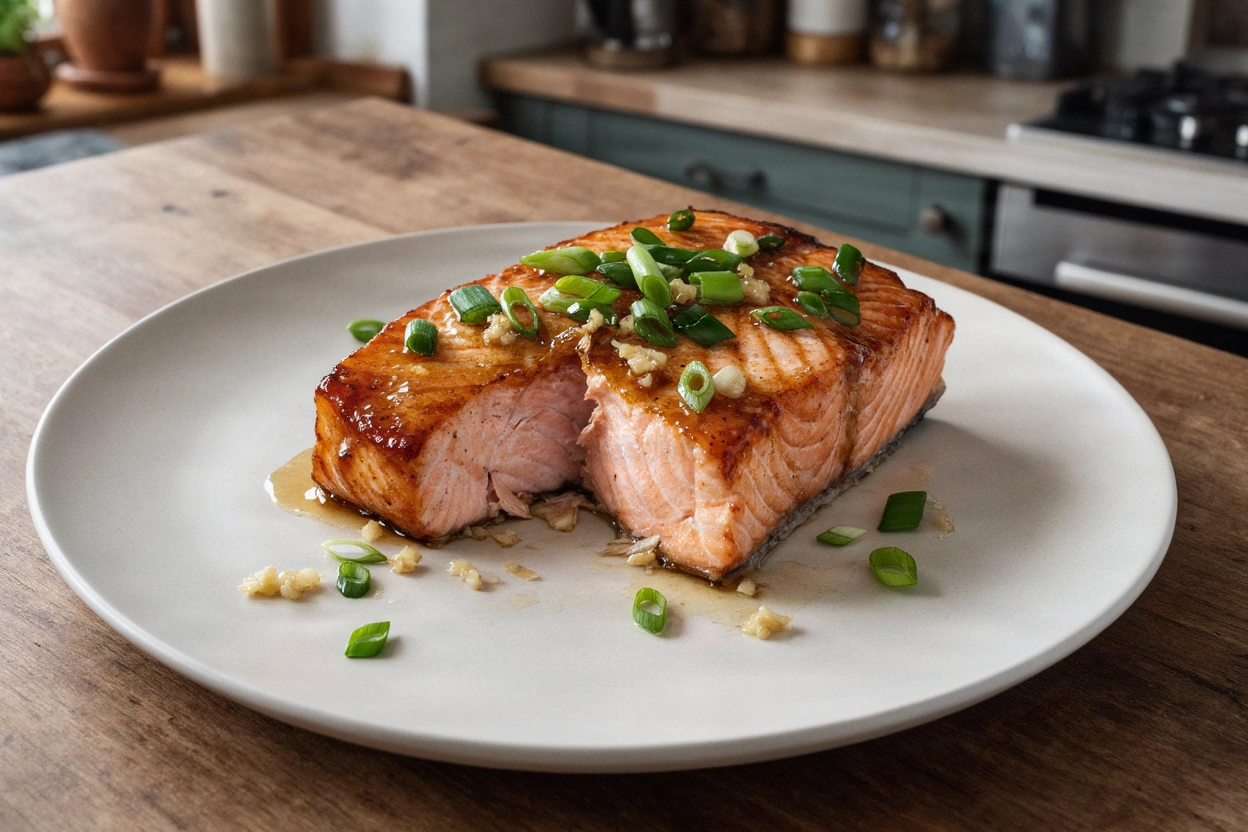
Lift the salmon out with a thin, wide spatula. Spoon the reserved sauce over the fillets, then scatter generously with scallion greens and optional sesame seeds. Serve with rice and steamed broccoli, or alongside a crunchy cucumber salad. Offer lemon wedges for anyone who prefers a brighter finish.
Tips
- Keep the glaze thin. A light coating clings better than a puddle. Save the extra sauciness for the plate rather than repeatedly basting the fish.
- Watch the surface as well as the thermometer. Deep golden edges are welcome; blackened garlic tastes bitter. If the glaze darkens before the center is ready, reduce the fryer to 350°F (175°C) and continue checking at short intervals.
- Skip extra salt initially. The soy sauce seasons both the glaze and the finished fish. If using regular rather than low-sodium soy sauce, substitute 1 tablespoon soy sauce plus 1 additional tablespoon water.
- Make small flavor changes. Add ½ teaspoon finely grated ginger to the saucepan, or replace the lemon juice with lime juice. Keep the scallion greens fresh for their contrasting texture.
Storage and Reheating
Refrigerate leftover salmon and sauce in separate covered containers within 2 hours of cooking. Keep the refrigerator at 40°F (4°C) or below, and use the salmon within 3–4 days.
For reheating, place a portion in a microwave-safe dish with a teaspoon of water and cover loosely. Heat at medium power in short intervals until the center reaches 165°F (74°C). Add leftover sauce afterward and finish with freshly sliced scallions.
For the best result on cooking day, have your sides ready before the salmon finishes, and let the thermometer—not the timer alone—decide when to lift it out.