
Tender whites, firm golden yolks, and no pot of boiling water: air-fryer hard-boiled eggs are handy for breakfast, egg salad, or a quick snack. The eggs cook right in their shells, then go straight into ice water before peeling.
Start with 15–18 minutes at 270°F (132°C), checking one egg at 14 minutes the first time. Air fryers vary, so treat that range as a starting point rather than a guaranteed finish time. The goal here is a fully firm yolk, not a jammy center.
Yield: 6 eggs, or 3 servings of 2 eggs each. Estimated time: About 30–40 minutes, including preparation, preheating, 15–18 minutes of cooking, and cooling. This assumes all 6 eggs fit in one spaced layer; each additional batch needs its own cooking time.
Ingredients
- 6 large eggs, cold from the refrigerator, with intact shells
- 3 cups cold water, plus more as needed to cover the eggs
- 2 cups ice cubes, plus extra if needed
- ¼ teaspoon kosher salt, optional, for serving
- ⅛ teaspoon freshly ground black pepper, optional, for serving
Use large eggs for the most useful starting point. Smaller eggs, extra-large eggs, and eggs brought to room temperature can cook differently, so keep the size and starting temperature consistent while learning your appliance’s timing. No oil or cooking spray is needed.
How To Make It
Prepare the ice bath and check the fit.
Fill a medium bowl with the cold water and ice, leaving enough room to submerge all the eggs without overflowing. Before heating the air fryer, check that the eggs fit in its basket in a single layer with a little space between them. Remove the eggs while the appliance preheats. Cook in batches only if necessary; do not stack or wedge them tightly together.
Preheat the air fryer.
Set it to 270°F (132°C) and preheat according to the manufacturer’s directions, usually a few minutes. This method assumes a preheated appliance, so starting with a cold basket may change the timing.
Add the eggs and cook.
Carefully place the refrigerator-cold eggs directly in the basket, using tongs if needed to avoid touching hot surfaces. Cook for an estimated 15–18 minutes. There is no need to shake the basket or turn the eggs. Keep the ice bath nearby so you can cool them promptly when they are ready.
Check early on your first batch.
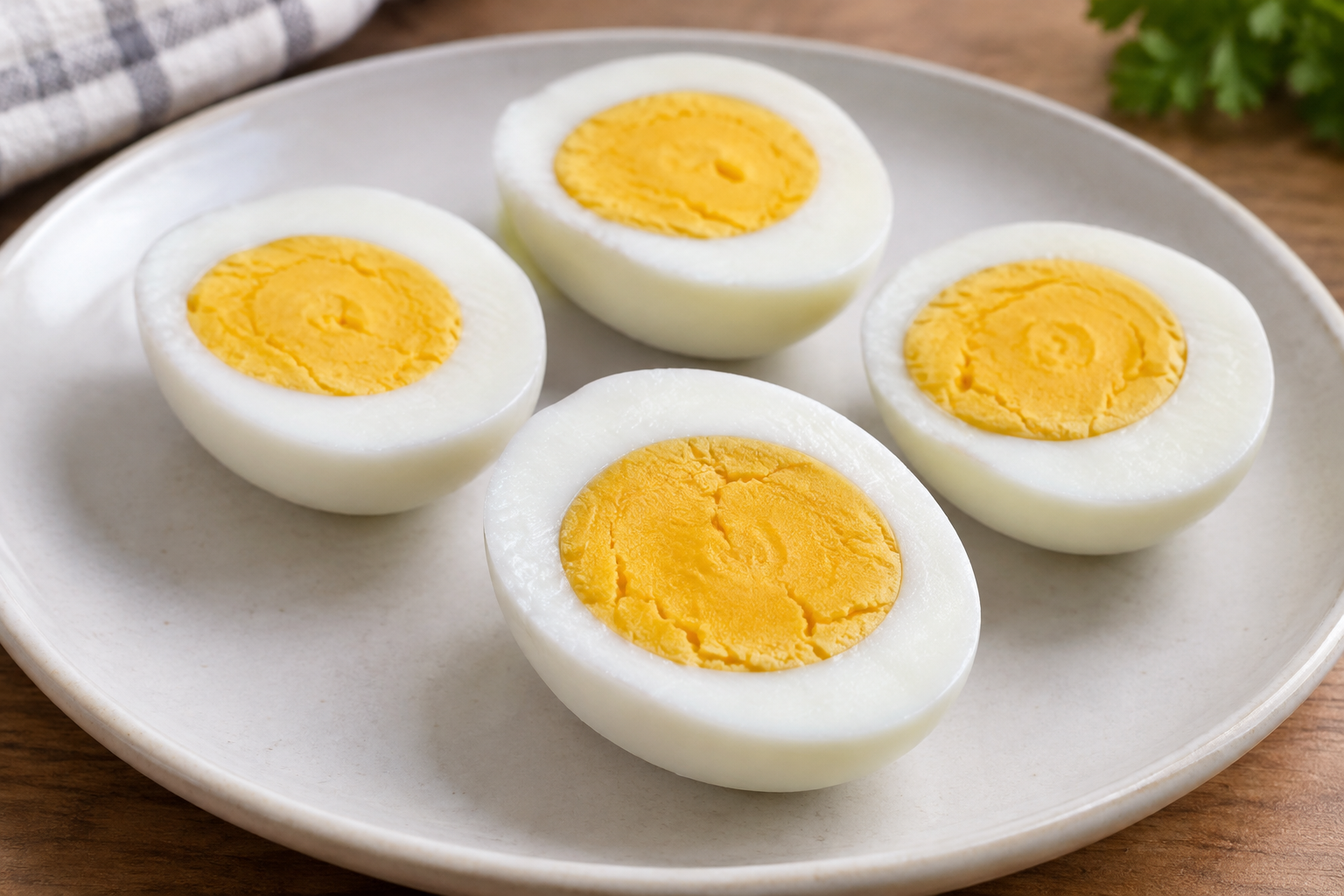
At 14 minutes, remove one egg with tongs and briefly cool it in ice water until you can safely handle it. Peel and halve it while keeping track of the remaining eggs’ cooking time. The white should be opaque and set, and the yolk should be firm throughout, without a glossy or soft center. If it needs longer, continue cooking the remaining eggs in 1-minute increments. Do not rely on shell color to judge doneness; eggs should be cooked until both white and yolk are firm.
Chill immediately.
Transfer the finished eggs gently into the ice bath with tongs or a slotted spoon. Leave them submerged for 5–10 minutes, adding ice if the water becomes warm. This cools them for handling and limits carryover cooking. If another batch is needed, replenish the ice bath before that batch finishes.
Crack and peel gently.
Tap an egg lightly all around, then roll it gently under your palm to loosen the shell without crushing the white. Start peeling at the wider end and work beneath the thin membrane, not just beneath individual shell pieces. Peel under a gentle stream of cold water if the shell sticks. Pat dry, season if desired, and serve whole, sliced, or chopped.
Tips
- Write down your appliance’s timing. Once you find the right result, note the temperature, minutes, egg size, and whether you preheated. Changing several of these at once makes troubleshooting harder. A timing that works in one air fryer may leave the yolks softer or firmer in another.
- Do not rush stubborn shells. If the white starts tearing, stop pulling off large pieces. Work slowly beneath the membrane with cold water running over the egg. Smoothly peeled eggs are nice for serving whole, but slightly ragged ones are still useful chopped into egg salad.
- Adjust for texture next time. If the whites seem tough or the yolks dry, shorten the next batch slightly and cool promptly. If the center is still soft, add cooking time rather than accepting a jammy yolk as hard-cooked.
Storage and Reheating
After cooling, dry the eggs and refrigerate them in a covered container at 40°F (4°C) or below. Store peeled eggs separately from shell-on eggs and label the container with the cooking date. Use either within 1 week. Refrigerate within 2 hours of cooking, or within 1 hour if the surrounding temperature is above 90°F (32°C). Do not freeze hard-cooked eggs.
These eggs are convenient served cold, so reheating is optional. Avoid microwaving whole hard-cooked eggs, even peeled ones, because they can burst. Peel only what you need, return the rest to the refrigerator, and save your successful cooking time for the next batch.